
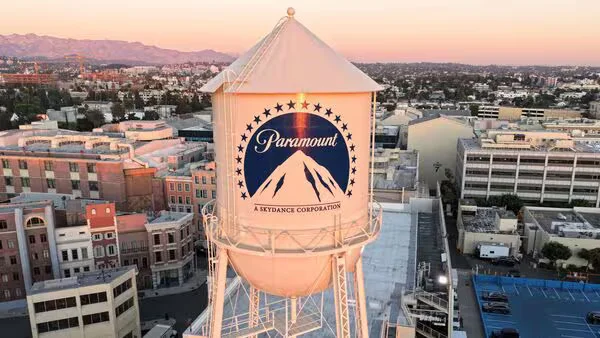
Talk around either a Netflix–Warner deal or a Paramount–Warner consolidation has unsettled analysts across Hollywood.
Even without a formal agreement, the possibility of Warner Bros Discovery joining forces with another major studio or the world’s largest streaming platform has raised concerns about an entertainment market dominated by a small handful of superpowers.
The Scale of a Combined Catalogue Raises Red Flags
Warner’s portfolio, which includes HBO, DC Studios, Max Originals, CNN, Cartoon Network, and a century’s worth of film content, is considered one of the most valuable in the industry.
Analysts argue that merging this catalogue with Netflix’s global distribution or Paramount’s legacy assets would create a content library so large that it could tilt the competitive balance of global streaming.
A Netflix–Warner combination would place the world’s biggest streamer in control of both top-tier franchises and premium television.
A Paramount–Warner merger would consolidate two of Hollywood’s remaining studio giants, shrinking the traditional studio landscape even further.
In both scenarios, experts believe the concentration of power would be difficult for competitors to challenge.
Fears of Shrinking Consumer Choice
Observers warn that a merged entity could reduce the variety of entertainment options available to viewers. With fewer major services in the market, subscription prices could rise, and licensing terms could become more restrictive.
This level of consolidation would give the combined platform significant influence over what content gets wide distribution and how consumers access it. Analysts say the result could be fewer alternatives and a market where audiences have little leverage.
Pressure on Talent and Independent Creators
Industry insiders also worry about how such a merger could affect writers, directors, actors, and small studios. With fewer major buyers for scripts and fewer commissioning platforms, negotiating power could shift overwhelmingly toward the newly combined company.
Creative experimentation may decline as a larger, risk-averse corporation prioritises proven franchises and predictable returns. Independent studios could struggle to secure distribution deals or to break through in an environment dominated by a single giant.
Global Markets Could Be Reshaped
A merger involving Netflix and Warner would have global consequences. Netflix’s reach extends across more than 190 countries, and Warner’s distribution strength is equally international. Together, they could overshadow regional competitors from Europe to Africa and Asia.
A Paramount–Warner tie-up, while more legacy-focused, would also have global ripple effects as two traditional studios consolidate their international presence. Analysts fear this could weaken local streamers and limit the space for culturally diverse content.
Regulatory Roadblocks Ahead
Such a major consolidation would almost certainly face scrutiny from regulators in the United States, the United Kingdom, and the European Union. Antitrust bodies are expected to examine whether the merger would harm competition, create unfair pricing conditions, or reduce opportunities for smaller media companies.
Despite these hurdles, financial pressures on traditional studios and the push for scale in streaming mean that merger discussions are likely to continue in some form.
A Future Dominated by Content Superpowers
The debate around these potential deals highlights a broader trend: the entertainment industry is entering a consolidation era. Analysts warn that a Netflix–Warner or Paramount–Warner combination could accelerate the shift toward a market controlled by a few content giants.
If that happens, the consequences would extend well beyond Hollywood. It could influence what gets made, how it is distributed, and how much consumers must pay to watch it.
Industry experts agree on one thing: any merger of this scale would reshape the future of global entertainment, for better or for worse.